
Cosmetic care. Careful assessment.
Skin Tag Removal in Moncton & Dieppe
A little tag can be a daily bother. Start with an assessment at Sparkle. Before cosmetic removal, we require medical clearance from your own doctor—then we can discuss an appropriate method, recovery and quote.

Est. since 2012
Doctor clearance required
Taryn RN oversight
Assessment before removal
First, make sure it is a skin tag.
Skin tags are often soft, raised growths that can rub against clothing or catch on jewellery. Other lesions can look similar. A cosmetic assessment at Sparkle does not replace medical diagnosis, biopsy or pathology.
Medical clearance comes first
We require clearance from your own doctor before treatment. A new, changing, painful, bleeding, ulcerated, rapidly growing or uncertain spot needs medical assessment—not cosmetic removal.
A method matched to the spot
Sparkle uses radiofrequency and ablative laser for appropriate skin tag removal. The method depends on the lesion, location, skin response and healing considerations. Clearance does not guarantee that cosmetic treatment is suitable.
The right team member for your treatment.
Treatment is performed by an appropriate Sparkle team member, depending on the method, with oversight from Taryn McLaughlin, RN. Not every team member performs every method.
Our team will explain who will provide your treatment, the approach and what to expect before you decide.
Assessment. Clearance. Then a plan.
01 Start with assessment
We discuss the spot, changes, symptoms, location, medications and healing history. We explain the clearance needed from your own doctor.
02 Confirm clearance & options
Before removal, we confirm medical clearance and cosmetic suitability. Your provider explains the RF or ablative laser approach, quote, risks and recovery.
03 Treat & care
When appropriate, treatment proceeds with the team member suited to the method. You receive aftercare and guidance on when to contact us or seek medical care.
Starting at $300.
Skin tag removal starts at $300. Your quote depends on the size of the treatment area and the proposed treatment. We confirm the plan and price before proceeding.
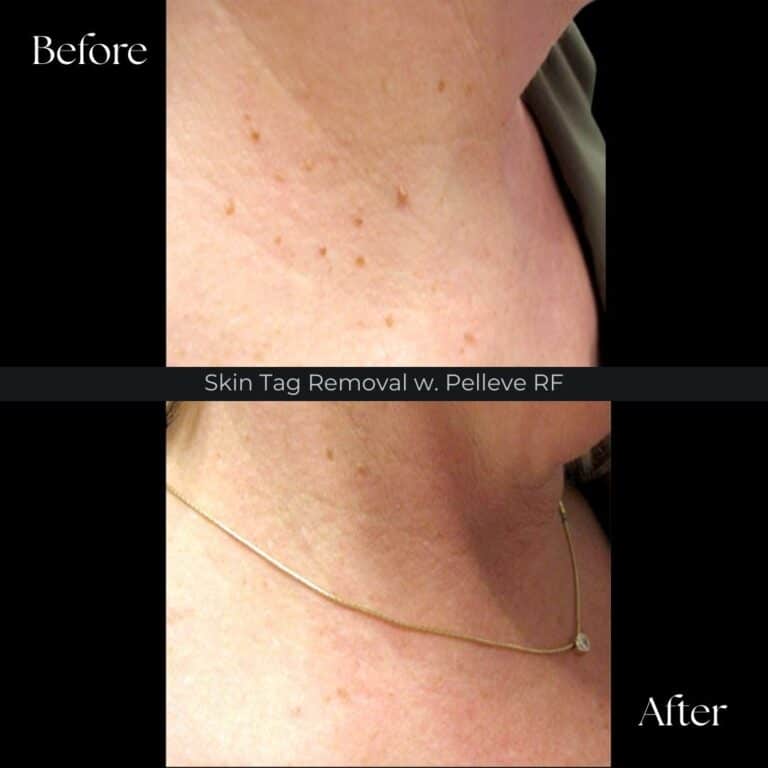
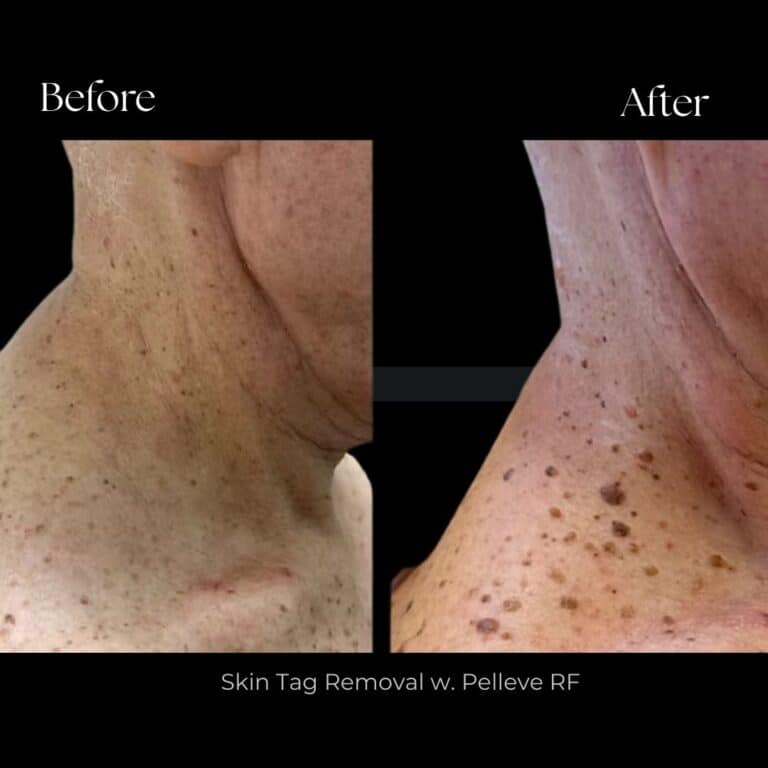
Real examples. Individual healing varies.
Before-and-after photos are educational examples, not a guarantee. Final appearance varies by the spot, method, location, skin response and aftercare.
A welcome from Sparkle
$50 towards your first treatment.
The new-client voucher applies to skin tag removal. Claim it before your first treatment; assessment and medical clearance are still required.
Opens the claim form in a new tab. Ask our team about any other offer terms before booking.
Small treatment. Real aftercare.
Before your visit
- Do not cut, tie, burn, pick or use wart remover on the spot.
- Tell us about medications, healing problems, scarring or pigment changes, and any recent changes to the lesion.
- Follow the assessment and medical-clearance pathway. Arrive with clean skin when possible.
After treatment
- Follow your provider’s instructions for cleansing, dressings, products, friction and sun protection.
- Do not pick or remove a scab. Healing time varies by area, method and your skin.
- Contact the clinic for increasing pain, spreading redness, unusual swelling, discharge or another concerning reaction. Seek medical care for severe or rapidly worsening symptoms.
Discomfort, redness, tenderness, swelling, pinpoint bleeding, crusting or a small scab can occur. Possible complications include burns or thermal injury, infection, pigment changes, delayed healing, scarring, incomplete removal, recurrence or an unsatisfactory result. Your provider explains method-specific risks; assessment and clearance do not eliminate them.
Your questions, answered.
Clear expectations before you choose cosmetic removal.
Do I need clearance from my own doctor?
Yes. Start with an assessment at Sparkle, and obtain medical clearance from your own doctor before cosmetic removal. We also assess whether the method and location are suitable for cosmetic treatment.
What if I am not sure the spot is a skin tag?
Do not try to remove it yourself. A new, changing, painful, bleeding, ulcerated, rapidly growing or uncertain lesion needs medical assessment. Cosmetic care does not replace diagnosis, biopsy or pathology.
Which removal methods does Sparkle use?
We use radiofrequency and ablative laser for appropriate skin tag removal. The method and treating team member depend on the lesion, location and individual assessment.
Who performs treatment?
An appropriate Sparkle team member performs treatment, depending on the method, with oversight from Taryn McLaughlin, RN. The team explains who will provide your treatment before you proceed.
What is healing like, and can a skin tag return?
Temporary tenderness, redness, swelling, crusting or a scab may occur. Healing and final appearance vary. Incomplete removal or recurrence is possible, and new skin tags may develop. Follow your personalized aftercare.
How much does skin tag removal cost?
Treatment starts at $300, depending on the size of the treatment area and the proposed plan. Your quote is confirmed before treatment. The $50 new-client voucher applies; assessment and medical clearance are still required.
Let’s start with the right assessment.
Bring your questions about the spot, the clearance process and recovery. We’ll explain whether cosmetic removal is an appropriate next step.