- Claim your voucher by filling out the quick form below.
- Book your consultation with one of our experts.
- Enjoy your $50 off at your first appointment.
- Let’s make this the beginning of something glowy.
Get $50 Towards Your First Treatment
Laser Hair Removal Burns: Prevention, Safety & Healing Guide
Clinical Safety Protocols | Thermal Injury Recovery | Expert Guidance in Moncton
Laser hair removal is incredibly safe when performed with medical-grade technology, but in the wrong hands, it carries the risk of thermal injury. At Sparkle Lifestyle & MediSpa, we believe safety comes from education. Whether you are researching risks or have experienced a burn at another facility, this clinical guide will help you understand how to protect your skin and accelerate the healing process.
✨ The Sparkle Safety Standard
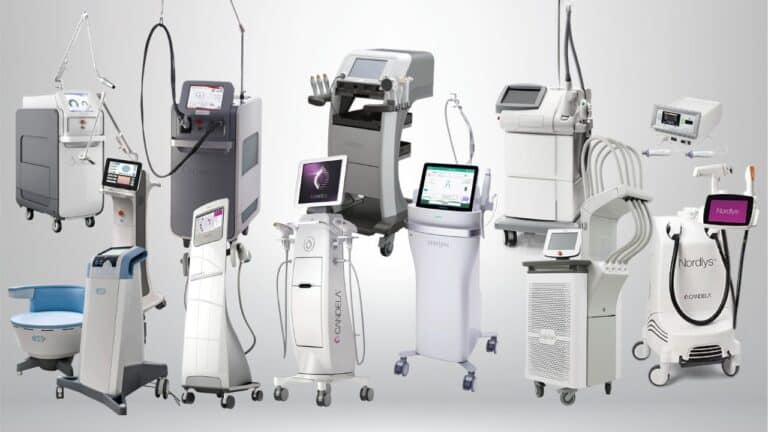
Our team, led by National Clinical Trainer Madelaine Caissie, uses the GentleMax Pro®. This device features a patented Dynamic Cooling Device (DCD) that sprays cryogen onto the skin milliseconds before the laser pulse. This advanced “thermal buffer” is why our burn rate is nearly zero. We don’t just use lasers; we train the industry on how to use them safely.
Book a Safety-First ConsultationWhy Do Laser Burns Happen?
A laser burn occurs when the skin’s surface (epidermis) absorbs too much heat energy meant for the hair follicle. This is usually caused by one of three things:
- The “Tanned Skin” Conflict: Lasers look for pigment. If you have a recent tan (natural or chemical), the laser cannot distinguish between the tan and the hair, causing an epidermal burn.
- Photosensitizing Medications: Common antibiotics, Retin-A, or even St. John’s Wort make the skin “hypersensitive” to light energy.
- Incorrect Technology: Using an IPL (Intense Pulsed Light) on dark skin tones is a major cause of burns. At Sparkle, we use the 1064nm Nd:YAG wavelength, which is the only safe standard for deep skin tones.
Identifying Your Skin Reaction
| Reaction Type | Appearance | Action Required |
|---|---|---|
| Normal Erythema | Mild redness/swelling around the hair follicle (like a hive). | Normal. Subsides in 2–24 hours. |
| First-Degree Burn | Deep redness, stinging, or “grid” marks on the skin. | Apply Osmosis Rescue MD or Aloe. Avoid heat. |
| Second-Degree Burn | Blistering, crusting, or dark “crusty” patches. | Contact your provider immediately. Do NOT pop blisters. |
Emergency Aftercare: If You Suspect a Burn
Frequently Asked Questions
Will a laser burn leave a permanent scar?
How long should I wait to treat the area again?
Why is IPL more dangerous for burns than Laser?
Trust the Laser Training Experts
Had a bad experience elsewhere? We specialize in corrective care and safety-first protocols. Let our clinical team help you achieve the results you want, safely.
Book a Professional AssessmentAuthorized Candela Training Center | Serving Moncton & Dieppe
Everything You Need To Know About Laser Hair Removal
- How Painful Is Laser Hair Removal?
- Laser Hair Removal on Blond Hair
- Laser Hair Removal Experience: What to Expect?
- Laser Hair Removal Side Effects
- Laser Hair Removal on Dark Skin
- Laser Hair Removal on the Face
- How to Prepare for Laser Hair Removal: Your Ultimate Guide
- How Permanent Is Laser Hair Removal?
- Laser Hair Removal for Men
- Can You Shave Before Laser Hair Removal?
- Can You Get Laser Hair Removal on Tattoos?
- How to Get Ready for Your First Laser Hair Removal Appointment
- How Does Laser Hair Removal Work?
- Laser Hair Removal Brazilian: What You Need to Know
- Understanding the Cost of Laser Hair Removal
- Cost of Laser Hair Removal
- Laser Hair Removal Bikini
- Laser Hair Removal Underarm
- Laser Hair Removal: Understanding the Risks and Side Effects
- What Happens If You Don’t Shave Before Laser Hair Removal?
- Laser Hair Removal Devices
- Laser Hair Removal & Cancer: Myths vs. Facts
- Laser Hair Removal Pre-Care
- Laser Hair Removal & Pregnancy
- Laser Hair Removal vs. Electrolysis
- Laser Hair Removal Burn: Causes, Prevention, and Treatment
- Laser Hair Removal & PCOS