Can Botox Actually Lift Your Eyebrows?
Yes — but not the way most people think. Botox does not push the brow up. It relaxes the muscles that are actively pulling the brow down, which allows your natural lifting muscle to do its job without competition. The result is a subtle but visible elevation — typically 2 to 4 millimetres — that opens the eye area and creates a more rested, refreshed appearance.
For most people, a brow lift requires 4 to 12 units depending on your anatomy and the look you want. Results appear within 3 to 7 days and last 3 to 4 months. Done well, nobody will know you had anything done. Done poorly, you can end up with a Spock brow or heavy lids — which is exactly why technique and anatomy knowledge matter.
How a Botox Brow Lift Works: The Muscle Mechanics
Your eyebrows are controlled by a balance of muscles — some that lift and some that pull down. When that balance shifts, the brow drops. Botox works by disrupting the pulling muscles just enough to let the lifting muscle take over.
Here is what is actually happening:
- The frontalis is the large muscle running across your forehead. Its job is to raise the brows and forehead. It is the only significant lifter in this area.
- The depressors are a group of smaller muscles around the brow — the orbicularis oculi (outer brow), the corrugator supercilii (inner brow and the “11s”), and the procerus (between the brows at the nose bridge). These all pull the brow downward in different directions.
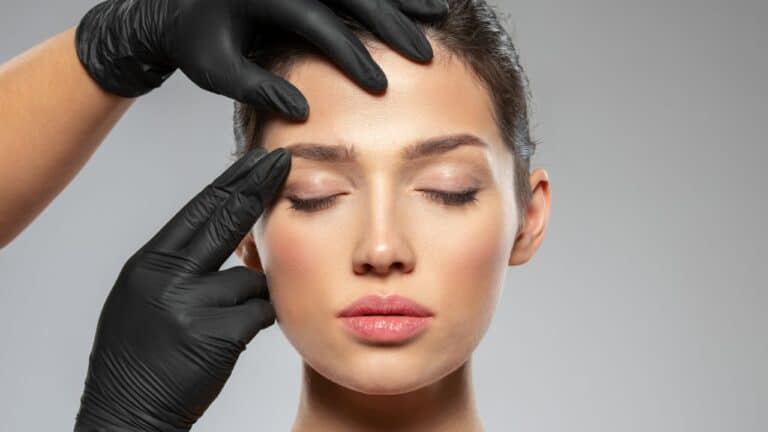
When we inject small, precise amounts of Botox into the depressor muscles, they relax. The frontalis — now working with less resistance — naturally pulls the brow into a slightly higher position. No filler, no surgery, no sutures.
The skill is in the balance. Too much product in the wrong location, and the frontalis gets caught in the crossfire — leading to a heavy forehead, drooping lids, or the classic Spock brow (more on that below). Strategic, conservative dosing in the right places is what separates a great result from a regrettable one.
What It Can and Cannot Do
A Botox brow lift is genuinely effective for:
- Lifting a brow that has gradually descended with age
- Opening the eye area to reduce a tired or heavy appearance
- Elevating the tail of the brow for a more sculpted arch
- Reducing the downward pull that creates 11 lines and horizontal forehead creases
- Creating subtle asymmetry correction when one brow sits lower
It is not the right solution for:
- Significant skin hooding from excess upper eyelid skin — that requires blepharoplasty (surgical eyelid correction)
- A severely descended brow with significant skin and tissue volume loss — a surgical brow lift will give a more lasting result
- Someone who already has a naturally high brow and wants dramatic elevation — Botox can only work with what your anatomy provides
We will tell you honestly at your consultation which category you fall into. If Botox will give you the result you are after, we will tell you. If it will not, we will tell you that too — and point you toward what will.
How Many Units of Botox for a Brow Lift?
This is the most common question we get about this treatment — and the honest answer is that it depends on your anatomy, your muscle strength, and the result you want. Here are the ranges we see most often:
| Target Result | Typical Units | Estimated Cost | Notes |
|---|---|---|---|
| Subtle Lateral Lift (tail of the brow only) |
4–6 units | ~$50–$80 | Ideal for a barely-there lift. Targets the outer orbicularis. Minimal risk. Great starting point for first-timers. |
| Standard Brow Lift (open-eye result) |
6–12 units | ~$80–$160 | The most common range. Targets lateral brow depressors for a balanced, natural lift across the full brow. |
| Full Lift + Glabella (brow + 11 lines) |
20–30 units total | ~$250–$400 | Treating the glabella (corrugators + procerus) alongside the brow gives the most complete elevation and the longest-lasting result. |
| Asymmetry Correction (one brow higher than other) |
2–6 units (targeted) | ~$25–$80 | Precise, low-dose placement to balance naturally uneven brows. Often added onto a full treatment rather than done in isolation. |
Note: These ranges are estimates based on typical anatomy. Men often require 25–40% more units due to greater muscle mass in the brow and forehead. Your exact dosage is determined at consultation. Pricing at $12–$14 per unit — confirm current per-unit rate at your consultation.
Why Units Vary So Much Between People
Three main factors determine your dose:
- Muscle strength. If you are highly expressive or have naturally strong brow muscles, more product is needed to adequately relax the depressors. Injecting too little means the lifting effect is minimal. Injecting the correct amount means the frontalis can finally do its job without being constantly pulled against.
- Desired result. A “just refreshed” look needs far fewer units than a more dramatic arch. We work with you to match the dosage to the result you actually want — not what looks impressive on a chart.
- Glabella involvement. The corrugator and procerus muscles (responsible for the 11 lines between the brows) are the strongest brow depressors. Including them in the treatment gives a significantly better and longer-lasting lift. Skipping them is like trying to pull a rope without releasing the anchor.
Botox vs. Dysport: Units Are Not the Same
If you have been quoted Dysport, the unit count will look very different — and that is normal. As a general rule, 1 unit of Botox is roughly equivalent to 2.5 to 3 units of Dysport. They are different formulations of the same active ingredient, with slightly different diffusion patterns. Neither is objectively better; the right choice depends on your anatomy and what your injector has the most experience with. We will be clear about which product we are using and give you the dosage in both unit types if it is helpful.
What Can Go Wrong — and How We Prevent It
A Botox brow lift is one of the more technique-sensitive areas on the face. Two outcomes in particular are worth understanding before you book anywhere.
The Spock Brow
The Spock brow — an overly arched, peaked appearance where the outer brow shoots up at a sharp angle — is probably the most recognized Botox outcome people want to avoid. It is caused by imbalanced relaxation of the depressor muscles. When the outer depressors are relaxed but the inner ones are not (or vice versa), the frontalis pulls unevenly and creates an exaggerated arch on one side or both.
It is not permanent — it fades as the Botox wears off — and in some cases a small touch-up injection can correct it within the treatment period. But it is far better to prevent it through precise, balanced placement from the start. Our injectors map the full brow before treating and dose conservatively on a first treatment, adjusting at a follow-up if needed.
Heavy Lids or a Dropped Brow
This happens when Botox migrates or is placed too low, affecting the frontalis or the muscles controlling the upper eyelid. The result is a brow that drops rather than lifts, sometimes accompanied by a heavy, tired-looking upper eyelid.
Prevention: precise placement at the correct depth, respecting the 1-centimetre safety margin above the orbital rim, and not treating patients who already have significant upper eyelid laxity with this technique alone. At your consultation we assess your upper eyelid anatomy specifically to flag this risk before we touch anything.
Asymmetry
Some natural facial asymmetry is normal and actually beautiful. But injecting symmetrical doses on an asymmetrical face can make that asymmetry more visible, not less. A skilled injector assesses your resting and dynamic facial symmetry before designing the treatment — sometimes intentionally dosing one side differently to create a more balanced result.
If you notice asymmetry after treatment, let us know at the two-week mark. Minor adjustments can often be made within the treatment window.
Is a Botox Brow Lift Right for You?
You are likely a good candidate if:
- Your brow has gradually descended and you look tired even when you feel rested
- You notice heaviness in the outer third of the brow that was not there a few years ago
- You want a more open, lifted eye area without surgery or significant downtime
- You have mild to moderate hooding of the upper eye that comes from brow descent rather than excess skin
- You want to soften the 11 lines between your brows at the same time
- You are looking for subtle, natural results — not a dramatic transformation
You may not be the best candidate if:
- Your main concern is excess upper eyelid skin — Botox cannot remove or tighten skin. This may be a conversation about upper blepharoplasty instead.
- Your brow is already very high and you want dramatic further elevation — Botox can only work within your anatomical range.
- You have had previous brow surgery or significant upper face procedures — we need to know this at your consultation, as it affects placement and dosage.
- You are pregnant or breastfeeding.
We will assess all of this at your consultation and tell you honestly what Botox can realistically achieve for your specific anatomy. If something else would serve you better, we will say so.
Combination Treatments: Getting More From Your Appointment
A Botox brow lift rarely lives in isolation. Here is what it is most commonly paired with and why:
| Add-On Treatment | Why It Pairs Well | Typical Additional Cost |
|---|---|---|
| Forehead Botox | Softens horizontal lines above the brow while the lift is active. Must be dosed carefully — too much forehead Botox can counteract the lift. | $80–$160 (6–12 units) |
| Glabella / 11 Lines | The corrugators are the strongest brow depressors. Including them creates the most complete and natural lift. | $120–$200 (10–16 units) |
| Temple Filler | Volume loss in the temples can contribute to brow descent. Restoring that volume supports the lifted position and improves overall upper face structure. | $400–$700 per syringe |
| Crow’s Feet Botox | The orbicularis oculi also depresses the outer brow. Treating crow’s feet at the same time reduces this downward pull and completes the eye-opening effect. | $100–$180 (8–15 units) |
| Under-Eye Filler | Lifting the brow can sometimes make under-eye hollowing more visible. Combining with a small amount of tear trough filler balances the result. | $500–$800 per syringe |
Not every combination is right for every client. At your consultation, we will look at your face as a whole and recommend only what will actually improve your result — nothing more.
Your Brow Lift Timeline
Before Your Appointment
Avoid blood thinners (Aspirin, Ibuprofen, high-dose Fish Oil, Vitamin E) for 3–5 days to reduce bruising. Do not drink alcohol the night before. Arrive with a clean face — no heavy makeup around the brow area. If this is your first time, come without expectations about what your brows “should” look like — we will assess your anatomy and set realistic goals together.
During Treatment (10–20 Minutes)
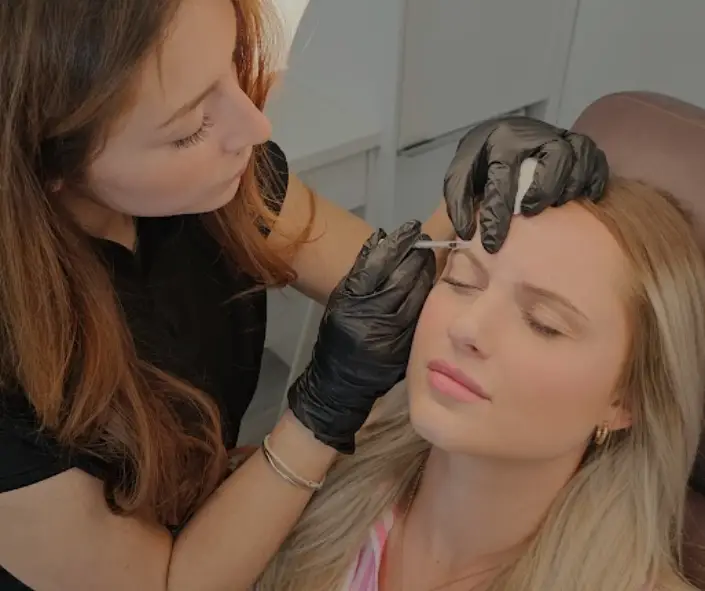
We assess your brow movement both at rest and while making expressions. Injections are small, quick, and most people describe the brow area as minimally uncomfortable — far less sensitive than the lip or forehead. We use the finest gauge needles available. You can drive yourself home and return to work immediately.
Hours 1–4 (Post-Treatment)
Stay upright. Do not lie down, bend forward, or massage the brow area for at least 4 hours — this prevents product migration to unintended muscles. Skip intense exercise and saunas for 24 hours. Small bumps or redness at injection sites are normal and typically resolve within a few hours.
Days 3–7 (Onset)
You will begin to notice the eye area widening and the brow sitting slightly higher. Some people see early results at day 3; others not until day 5 or 6. Do not panic if nothing is happening yet — the full effect takes time to develop.
Day 14 (Peak Results)
This is your result. The brow is at its maximum elevation and the depressors are fully relaxed. If you are unhappy with symmetry or feel the lift is uneven, this is the time to come back for a complimentary assessment. Small adjustments are possible in the first 2 weeks if needed.
Months 3–4 (Maintenance Window)
Results typically last 3 to 4 months. You will notice the depressor muscles gradually regaining strength, the brow beginning to settle back toward its original position. Most clients schedule their next treatment every 12–16 weeks. With consistent maintenance, many people find results hold slightly longer over time as the depressor muscles adapt to being relaxed.
Why Come to Sparkle for Your Brow Lift
The brow is one of the most expression-sensitive areas on the face. A few millimetres in the wrong direction changes how you read emotionally to other people — tired, angry, surprised, or perfectly natural. This is not a treatment you want done by someone who learned from a YouTube tutorial.
We Map Before We Inject
Before we touch anything, we assess your brow movement at rest, in conversation, and through a range of expressions. We photograph your face in natural lighting from multiple angles. We identify your natural asymmetries and work with them, not against them. This assessment is what allows us to design a treatment plan that creates a balanced result for your specific face — not a generic approach copied from a protocol sheet.
Sparkle Academy Clinical Training
Our injectors train through Sparkle Academy, Sparkle’s own advanced clinical training program. That means they understand the full three-dimensional anatomy of the brow — not just where to inject but why, what adjacent structures to protect, how muscle strength and depth affect diffusion, and how brow anatomy interacts with the upper eyelid and forehead. This is the depth of knowledge that prevents Spock brows and heavy lids before they happen.
Conservative First, Adjust as Needed
We start conservatively. It is far better to add a small touch-up at two weeks than to over-inject and leave you waiting for it to wear off. First-time brow lift clients always get a conservative approach with a follow-up assessment included. We would rather under-impress on week one and deliver a great result at week two than gamble with your face.
Medical Oversight on Every Treatment
Our clinic operates under physician oversight. A medical director and doctors are involved in clinical protocol development and are available when needed. Complications are rare with brow injections, but knowing the team behind your treatment understands facial anatomy at a medical level matters.
Same-Day Treatment Available
If you come in for a consultation and decide you want to proceed, we can treat the same day in most cases. Your consultation fee of $100 is applied in full as a credit toward your treatment. No separate appointments, no waiting weeks for a slot.
Investment Summary
- Consultation: $100 (applied 100% toward your treatment — it is not an additional cost)
- Subtle Lateral Lift (4–6 units): $50–$80
- Standard Brow Lift (6–12 units): $80–$160
- Full Lift + Glabella (20–30 units): $250–$400
- Brow Lift + Forehead + Crow’s Feet (full upper face): $350–$600
Pricing is per unit. Confirm current per-unit rate at your consultation — rates are updated periodically. We will give you an exact quote based on your anatomy and goals before we proceed. No surprises.
We offer flexible payment plans and VIP membership pricing for clients who maintain regular treatments. Ask about our membership options at your consultation.
Botox Brow Lift — Questions Answered
How long until I see results?
Most people notice the eye area beginning to open up somewhere between day 3 and day 7. Full results appear at the 14-day mark. If nothing is happening by day 5, do not worry — some people metabolize Botox slightly slower. Give it the full two weeks before assessing your result.
Will a brow lift make me look surprised or frozen?
Not if it is done correctly. The goal is not to freeze your forehead — it is to gently shift the resting position of the brow without eliminating natural movement. With the right dosage, you will still be able to raise your brows, frown lightly, and make normal expressions. The only thing that changes is the baseline position: slightly higher, slightly more open. People will notice you look refreshed without knowing why.
What is the difference between Botox and Dysport for a brow lift?
Both are neuromodulators with the same active ingredient and the same mechanism — the difference is in formulation, diffusion patterns, and unit measurement. Roughly 1 unit of Botox equals 2.5 to 3 units of Dysport. Dysport tends to spread slightly more, which some injectors prefer for larger muscle areas. Neither is categorically superior; what matters most is the skill of the injector and the precision of the placement. We will use whichever is most appropriate for your anatomy and will be transparent about which product we are using and why.
Can I get a brow lift if I already have forehead Botox?
Yes, but it requires more careful dosing. If your forehead frontalis is already relaxed from Botox, adding brow-lifting product needs to be done conservatively to avoid over-relaxing the area. We need to know your full injectable history — how many units you typically receive, where, and when your last treatment was — before designing your brow lift protocol. This is why your consultation is a full assessment, not just a brief chat.
Will my brows drop lower when the Botox wears off?
No. Your brows will return to their natural pre-treatment position as the product wears off — they will not sink lower than where they started. Some people worry that Botox makes things “worse” when it wears off, but this is a myth. Your muscles gradually regain their function and your brows return to baseline. Nothing is lost by stopping treatment.
How is a Botox brow lift different from a surgical brow lift?
A surgical brow lift physically repositions the brow by altering the underlying tissue — it is permanent, requires anesthesia and recovery time, and produces more dramatic elevation. A Botox brow lift is temporary, non-invasive, and produces a subtler result. For people with mild to moderate brow descent, Botox often gives a beautiful result without any of the surgical risk or recovery. For people with significant skin laxity or severe descent, surgery may ultimately give a better long-term outcome. We will be honest about which applies to you at your consultation.
What if I get a Spock brow?
First — it is temporary. It will resolve as the Botox wears off. Second — in many cases, a small corrective injection can smooth it out within the treatment period. A Spock brow happens when depressor relaxation is uneven, leaving one area of the frontalis pulling more strongly than others. A targeted injection into that overactive portion typically resolves it within a week. If this happens to you, come back and let us see you. We will sort it out.
How often do I need to come in to maintain my results?
Most people schedule every 12 to 16 weeks (3 to 4 months). Waiting until the brow fully drops back to baseline before retreating means starting over each time. Maintaining a consistent schedule keeps the depressors in a state of controlled relaxation, which is both more comfortable and more effective long-term. Over time, with consistent treatment, some clients find they can stretch to every 5 months.
Does a brow lift help with hooded eyes?
It depends on what is causing the hooding. If the hooding is primarily from brow descent — meaning the brow has dropped and is pushing upper eyelid skin down — then yes, lifting the brow can meaningfully improve hooded eyes. If the hooding is from excess upper eyelid skin itself, Botox will not remove or tighten that skin. In that case, a surgical consultation for blepharoplasty may be the more appropriate conversation. We assess this specifically at your consultation and tell you which applies to your situation.
Is there anything I should avoid after my brow lift?
For the first 4 hours: stay upright, do not lie down or bend forward, do not touch or massage the brow area. For the first 24 hours: avoid intense exercise, saunas, hot yoga, and alcohol. For the first 48 hours: skip facial treatments or anything that involves heat or pressure near the brow. After that, you can return to your full normal routine. We provide written aftercare instructions at every appointment.
Ready to See What Your Brows Can Look Like?
The best way to know if a Botox brow lift is right for you is to come in and let us actually look at your face. Every consultation includes a full assessment of your brow anatomy, muscle strength, and upper face structure — and the $100 fee is applied entirely toward your treatment if you decide to proceed.
We serve clients in Moncton, Dieppe, and Riverview. Same-day treatment is available in most cases.
Book Your Consultation View Botox Results
Serving Moncton, Dieppe, and Riverview since 2013.
Our Blog : Everything You Need To Know About Botox
Botox Before & After
What Is Botox
- The Dangers of Bad Botox: How to Avoid Unwanted Results
- Is Botox Safe? Debunking the Myths and Misconceptions
- Side Effects of Botox
- How Does Botox Work?
- How Long Does Botox Last?
- Botox Treatment
- Botox vs Juvederm: What’s the Difference?
- What Is Botox Used For?