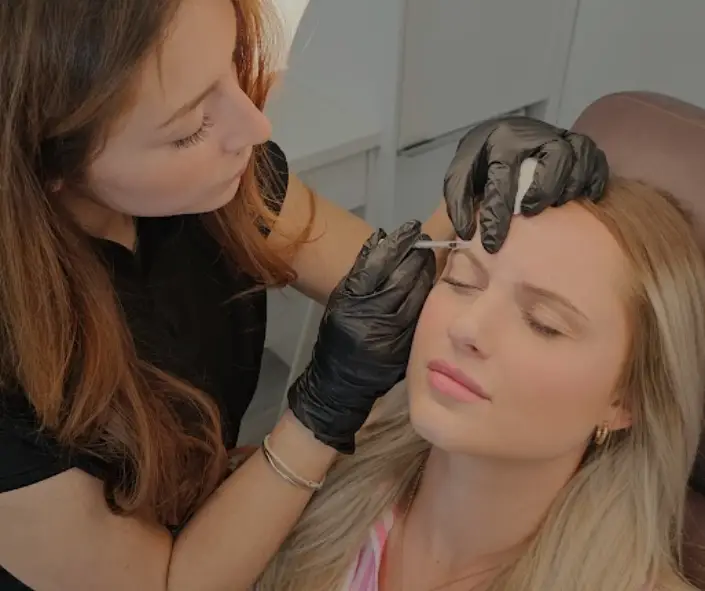
Botox Safety · Side Effects · Long-Term Use · Moncton NB
Is Botox Safe? Risks, Side Effects & Long-Term Questions
Botox can be appropriate for selected adults, but it is not risk-free. Safe treatment depends on the candidate, authorized product, qualified healthcare provider, dose, placement, timing, informed consent, and follow-up. This guide covers common reactions, unwanted cosmetic results, urgent warning signs, pregnancy and breastfeeding, stopping treatment, long-term use, and reduced response.
Already Worried About a Result?
Know where to turn.
For a cosmetic concern, contact the treating provider and explain what changed and when. For difficulty breathing, swallowing or speaking, weakness away from the injection area, or severe or rapidly worsening symptoms, seek immediate medical care.
A cosmetic follow-up is not a substitute for emergency care.
SERVING SINCE 2012
REGISTERED NURSE INJECTORS
PHYSICIAN OVERSIGHT
MONCTON · DIEPPE · RIVERVIEW NB
In short: Botox Cosmetic is a prescription onabotulinumtoxinA treatment that temporarily reduces activity in selected muscles. Health Canada advises that cosmetic Botox be administered by a qualified healthcare provider. Local injection reactions, headache, unwanted muscle weakness, asymmetry, brow heaviness, or eyelid droop can occur. The Canadian product monograph also warns that toxin effects can spread from the injection area and that swallowing or breathing difficulties can be life-threatening. Appropriate screening and individualized treatment lower avoidable risk, but no injector can promise zero risk or a guaranteed result.
Start Here
Botox changes muscle activity. It does not treat every sign of aging.
Small injections temporarily reduce the nerve signal to targeted muscles. That can soften movement-related lines when the treatment matches your anatomy and goals. It does not replace lost volume, physically tighten loose tissue, remove pigmentation, or resurface skin.
Movement lines
Best suited to concerns influenced by repeated muscle movement.
Temporary effect
Movement gradually returns. Cosmetic effects commonly last about three to four months.
Not filler
Botox does not add volume and cannot be dissolved like hyaluronic-acid filler.
Prescription treatment
Product sourcing, preparation, medical screening, consent, and clinical judgment matter.
The Safety Framework
Safe treatment is bigger than injection technique.
01
Right candidate
Review health history, medications, allergies, anatomy, previous reactions, and goals first.
02
Right product
Use an injectable authorized for sale in Canada and obtained through appropriate medical channels.
03
Right provider
Look for professional qualifications, anatomy knowledge, assessment, consent, documentation, and follow-up.
04
Right plan
Dose and placement should match your movement pattern, treatment area, product, and desired result.
Side Effects & Warning Signs
Know what may be local, what deserves a call, and what needs urgent care.
Possible local effects
Redness, tenderness, swelling, bruising, injection-site discomfort, small bumps, headache, or temporary local weakness may occur.
Contact your provider
Unexpected eyelid or brow droop, significant asymmetry, unusual eye symptoms, smile changes, persistent pain, signs of infection, or another concerning change deserves assessment.
Seek immediate medical care
Difficulty breathing, swallowing or speaking; weakness away from the injection site; severe allergic-reaction symptoms; or other severe or rapidly worsening symptoms require urgent medical assessment.
Timing matters: the Canadian product monograph notes that symptoms related to spread of toxin effect have been reported hours to weeks after injection. Do not wait for a cosmetic follow-up if breathing, swallowing, speech, or generalized strength is affected.
Unwanted Results
“Bad Botox” is not always too much Botox.
An unwanted result may come from dose, placement, product choice, timing, anatomy, compensation, natural asymmetry, or a result that simply does not match your preference. A cosmetic outcome and a medical side effect are not the same thing.
Frozen or heavy
Too little movement, brow heaviness, or a lower-looking brow may occur when the balance between forehead elevators and depressors changes.
Uneven or overarched
One side may respond differently, or remaining forehead activity can create an exaggerated outer arch.
Droop or function change
Eyelid droop, smile changes, dry-eye symptoms, or unintended local weakness need assessment rather than online diagnosis.
Dose
The appropriate amount depends on the product, muscle, area, strength, anatomy, and goal.
Placement
Small placement differences can change which fibres are weakened and how nearby muscles compensate.
Anatomy
Existing asymmetry, eyelid anatomy, brow position, and compensating muscles all affect the result.
Product
Unauthorized, counterfeit, mishandled, or incorrectly prepared product creates additional risk.
If Something Looks Wrong
Do not immediately chase an early result with more Botox.
Botox does not reach its complete cosmetic effect immediately. Early movement or asymmetry can change as treatment develops. Unless symptoms are urgent, the treating provider may want to assess the result after an appropriate interval before deciding whether anything should be adjusted.
01
Contact the provider
Share the date, product if known, treated areas, and whether symptoms are cosmetic, functional, or worsening.
02
Allow assessment
The next step may be observation, a deliberate adjustment, medical evaluation, or simply more time.
03
Avoid over-correction
Additional injections change muscle balance again. Corrections should be intentional, not reactive.
04
Escalate urgent symptoms
Breathing, swallowing, speech, generalized weakness, or severe allergic symptoms belong in urgent medical care.
Stopping, Long-Term Use & Reduced Response
What changes over time — and what does not.
What happens when you stop?
The last treatment gradually wears off and muscle activity returns. Expression lines may become visible again as movement returns and natural aging continues. Stopping does not create a Botox “withdrawal.” Avoid promising an exact return to a years-old baseline because your face and skin continue to change with time.
Is long-term use safe?
Repeated treatment should not become automatic. Your provider should reassess facial movement, brow and eyelid balance, muscle strength, dose, timing, medical history, treatment goals, and whether another strategy now fits better. Evidence from a limited number of repeat-treatment studies cannot guarantee the same experience for every person over many years.
Can Botox stop working?
A reduced response can reflect dose selection, muscle selection, anatomy, storage or preparation, changing movement patterns, expectations, or treatment timing. Neutralizing antibodies are possible, but the Canadian monograph says the proportion of patients who lose response and have demonstrable antibodies is small.
Do not shorten treatment intervals on your own.
The current Canadian Botox Cosmetic monograph recommends injection intervals no more frequent than every three months. It also notes that higher doses or more frequent injections may increase antibody formation and recommends the lowest effective dose at the longest feasible interval when appropriate.
A better response review
- Confirm the product, dose, date, treatment areas, and expected timeline.
- Wait for the usual treatment interval before labeling the result a failure.
- Compare actual movement and photos rather than memory alone.
- Let the prescriber assess technique, anatomy, product handling, and other possible causes.
Pregnancy & Breastfeeding
Sparkle does not provide cosmetic neuromodulator injections during pregnancy or breastfeeding.
This is a clinic policy for an elective treatment. The Canadian Botox Cosmetic monograph says the product should not be used during pregnancy and that it is not known whether the drug is excreted in human milk. That uncertainty is different from proof of harm and different from proof of safety.
When can I restart?
Once you are no longer pregnant and have fully finished breastfeeding, book a new consultation. Your provider should reassess medical history, postpartum changes, facial movement, skin quality, goals, and current medications before deciding whether treatment is appropriate. Sparkle does not publish a universal waiting period because individual circumstances differ.
What if I was treated before I knew?
Do not panic or rely on social-media advice. Contact the healthcare professional managing your pregnancy or postpartum care, share the product, dose, date, and treated areas if known, and pause further elective injections until you receive individualized guidance.
The Whole-Face View
Botox is not a complete anti-aging plan.
More Botox is not the answer to every line. If the concern comes from skin texture, pigmentation, sun damage, collagen loss, laxity, dehydration, or volume change, reducing muscle movement may only address one part of it—or may not address it at all.
A responsible consultation can recommend skincare, sun protection, skin treatments, volume support, a different procedure, less toxin, or no injectable treatment.
Ask what is actually causing the concern.
- Movement: neuromodulator treatment may help.
- Volume loss: Botox does not replace volume.
- Laxity: muscle relaxation does not physically tighten loose skin.
- Texture or pigment: skincare or skin-directed treatment may be more relevant.
- Deep static lines: a combined plan may be needed, and complete erasure is not guaranteed.
Choosing a Provider
Questions worth asking before anyone injects you.
Who is treating me?
Understand the provider’s professional role, injectable training, experience, and medical oversight.
What product is this?
Ask the product name and confirm it is authorized for sale in Canada. You can ask to see the label and DIN.
Why this plan?
The provider should explain the area, dose strategy, expected result, risks, alternatives, and why it fits your face.
What if Botox is wrong for me?
A real consultation includes the possibility of less treatment, a different treatment, delayed treatment, or no treatment.
What happens afterward?
Ask when results develop, what to watch for, how to reach the clinic, and when follow-up is appropriate.
Can I ask safety questions?
Yes. You should be able to ask about product, risks, alternatives, treatment decisions, and follow-up without pressure.
Candidacy
Not everyone should receive Botox today.
Disclose medical conditions, medications and supplements, allergies, previous botulinum toxin products and dates, previous reactions, neurological or muscular conditions, swallowing or breathing problems, and any infection or inflammation near the proposed treatment area. Do not stop prescribed medication unless your prescribing professional directs you.
May be appropriate
Your concern is influenced by muscle activity, screening supports treatment, and the likely benefit matches your goal.
May need to wait
Active infection or inflammation, an unresolved medical issue, recent treatment elsewhere, or a medication concern may change timing.
Do not proceed at Sparkle
Sparkle does not provide cosmetic Botox, Dysport, or other cosmetic injectable treatment during pregnancy or breastfeeding.
Review Botox pre-care before your appointment and Botox aftercare afterward. For treatment areas, pricing factors, candidacy, and Sparkle’s complete injectable process, visit Botox & Dysport in Moncton and Dieppe.
Frequently Asked Questions
Botox safety questions, answered.
Is Botox safe?
Botox Cosmetic is an authorized prescription treatment in Canada. It can be appropriate for selected adults when a qualified healthcare provider performs proper screening, uses authentic authorized product, and chooses suitable dose and placement. It still has risks, so “safe” should never mean guaranteed or risk-free.
What are common Botox side effects?
Possible effects include injection-site pain, redness, tenderness, swelling, bruising, headache, and temporary local weakness. Unwanted asymmetry, brow heaviness, eyelid droop, eye symptoms, or smile changes can also occur and should be assessed by the treating provider.
When should I seek medical care after Botox?
Seek immediate medical care for difficulty breathing, swallowing or speaking, weakness away from the injection site, severe allergic-reaction symptoms, or other severe or rapidly worsening symptoms. These are not routine cosmetic follow-up concerns.
What does “bad Botox” look like?
People may use the phrase for a frozen or heavy forehead, an exaggerated brow arch, eyelid or brow droop, asymmetry, smile changes, or a result that does not match their preference. Some are cosmetic outcomes; others are medical side effects. The appropriate response depends on the symptom.
Can bad Botox be fixed?
Botox cannot be dissolved like hyaluronic-acid filler. Some imbalances may be adjusted by a qualified provider after the result is fully assessed, while others improve mainly as the effect wears off. Adding more treatment too early can worsen the balance.
How long does Botox last?
Health Canada says cosmetic effects generally last about three to four months. Duration varies with product, dose, treatment area, muscle strength, metabolism, and individual response.
What happens when you stop Botox?
The treatment gradually wears off and muscle activity returns. Expression lines may become more visible again as movement returns and natural aging continues. Stopping does not cause a Botox withdrawal, but it is not accurate to promise a return to an exact years-old baseline.
Can Botox make you look older if you stop?
Stopping does not suddenly accelerate aging. However, you may notice lines and movement again after becoming used to a smoother appearance, and your face has continued to age during the time you were treated.
Is long-term Botox use safe?
Repeat treatment should be reassessed over time rather than treated as automatic maintenance. Current evidence and product monitoring support repeated use in appropriate patients, but no study can guarantee the same result or risk profile for every person over many years. Dose, interval, anatomy, health history, and goals should be reviewed at each visit.
Can you build a tolerance or resistance to Botox?
Neutralizing antibodies can reduce response, but the Canadian monograph says the proportion of patients who lose response and have demonstrable antibodies is small. Dose, muscle selection, anatomy, timing, storage, preparation, changing movement patterns, or expectations may also explain a weaker result.
How often can you get Botox?
The Canadian Botox Cosmetic monograph recommends injection intervals no more frequent than every three months. Your prescriber may recommend a longer interval based on the area, response, dose, product, and treatment plan.
Can I get Botox while pregnant or breastfeeding?
Sparkle does not provide cosmetic Botox, Dysport, or other cosmetic injectable treatment during pregnancy or breastfeeding. The Canadian Botox Cosmetic monograph says it should not be used during pregnancy and that it is unknown whether the drug is excreted in human milk.
When can I restart Botox after breastfeeding?
At Sparkle, book a new consultation once you have fully finished breastfeeding. Your provider will reassess your medical history, current medications, postpartum changes, facial movement, skin quality, and goals. There is no universal waiting period published on this page.
How do I know whether the product is legitimate?
Ask for the product name, confirm it is authorized for sale in Canada, and ask to see the product label and Drug Identification Number. Authorized products should come through appropriate medical supply channels. Health Canada has warned that counterfeit and unauthorized botulinum toxin injectables can create serious risks.
Where can I get Botox in Moncton?
Sparkle Lifestyle & MediSpa provides Botox and Dysport consultations in Moncton for clients from Moncton, Dieppe, Riverview, and surrounding New Brunswick communities. Treatment is performed by registered nurse injectors under physician oversight after candidacy assessment.
Canadian safety references
- Health Canada: Cosmetic injections
- Health Canada-authorized Botox Cosmetic product monograph, revised April 9, 2025
- Health Canada Drug and Health Product Register: Botox Cosmetic
- Health Canada advisory on counterfeit botulinum toxin injectable product
This page is educational and does not replace individualized medical assessment, the current product monograph, or emergency medical care. Product indications, warnings, and clinic policies can change.
Botox, But Keep Your Face
Want Botox that looks intentional, not obvious?
Start with a consultation. We will assess your anatomy, movement, health history, previous treatment, concerns, and goals before recommending Botox, Dysport, another strategy, delayed treatment, or no injectable treatment.