
PRP Hair Restoration · Hair Loss Treatment · Moncton & Dieppe NB
PRP for Hair Loss in Moncton & Dieppe
Hair loss can feel emotional, frustrating, and personal. PRP may help selected clients support scalp health, reduce shedding, and improve the look of hair density over time. At Sparkle, PRP hair restoration is planned after consultation, scalp assessment, medical history review, and realistic discussion of what PRP can and cannot do.
PRP therapy
3–6 sessions
4–6 weeks
Maintenance
Est. since 2012
Physician Oversight
All Skin Tones
Moncton · Dieppe · Riverview NB
In short: Sparkle Lifestyle & MediSpa offers PRP for hair loss in Moncton and Dieppe for selected clients with thinning hair, shedding, receding hairline, postpartum or hormonal hair changes, or mild to moderate pattern hair loss. A typical plan often includes 3–6 PRP treatments spaced 4–6 weeks apart, with maintenance every 4–6 months when appropriate. Early assessment matters because PRP works best when follicles are still active.
What It Is
PRP uses platelet-rich plasma from your own blood to support scalp and follicle health.
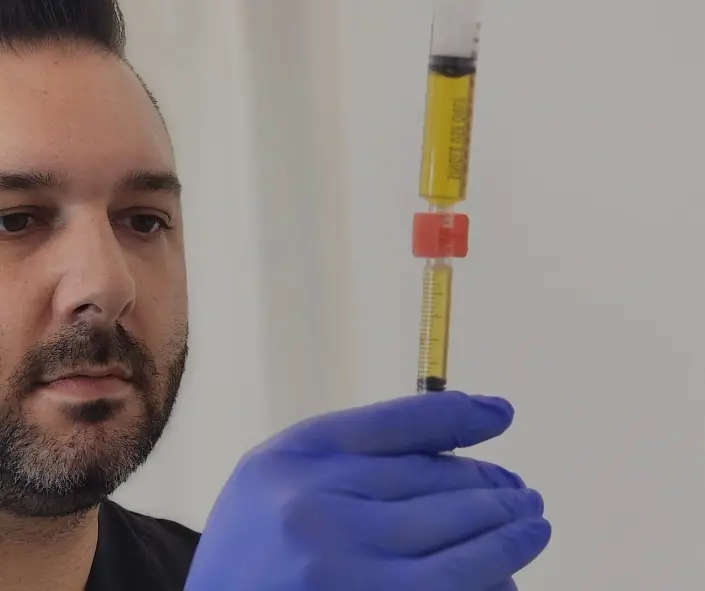
During PRP hair restoration, a small blood sample is taken and processed in a centrifuge to separate platelet-rich plasma. The PRP is then injected into targeted areas of the scalp where thinning or shedding is a concern.
PRP contains platelets and signaling proteins that may support the scalp environment and hair follicle activity in appropriate candidates. It is not a guaranteed hair-regrowth treatment and does not replace medical assessment when hair loss has an underlying cause.
Your own plasma
PRP is prepared from your own blood sample.
Scalp injections
PRP is placed into selected thinning areas using small needles.
Series-based
Results usually require consistency, timing, and maintenance.
Candidacy
PRP works best when follicles are still active.
Hair loss has many causes. PRP may be helpful for selected clients with early thinning, shedding, or mild to moderate pattern hair loss, but advanced follicle loss, scarring hair loss, thyroid issues, iron deficiency, medication-related shedding, or hormonal concerns may require medical investigation or combination care.
May be a fit
Early thinning, increased shedding, receding hairline, postpartum or hormonal hair changes, or mild to moderate pattern loss.
May not be a fit
Severe follicle loss, scarring alopecia, active scalp infection, platelet disorders, or unmanaged medical causes.
Needs assessment
Sudden shedding, patchy loss, scalp pain, scaling, or dramatic hair change should be medically reviewed.
Consultation first
We review scalp, hair history, medications, labs/medical care when relevant, goals, and expectations.
The Sparkle Process
Hair restoration starts with understanding why you are shedding.
01
Consultation
We review scalp, hair-loss history, timeline, medical factors, medications, and goals.
02
Blood draw + PRP
A small blood sample is processed to isolate platelet-rich plasma.
03
Scalp injections
PRP is injected into targeted thinning areas using fine needles and comfort measures.
04
Series + maintenance
Treatments are usually repeated in a series, then maintained based on response.
Treatment Goals
What PRP hair restoration may support.
Shedding support
May help reduce excessive shedding for selected clients.
Density goals
May support the appearance of thicker, fuller-looking hair over time.
Scalp health
May support scalp environment and follicle activity.
Early intervention
Often discussed when thinning is still early and follicles remain active.
Results Timeline
Hair changes take time — and consistency.
Hair grows slowly, so PRP results are gradual. Some clients notice shedding changes first, while density and thickness changes take longer. Results vary based on the cause of hair loss, follicle health, age, hormones, nutrition, and consistency.
2–3 months
Some clients notice shedding or hair-quality changes.
3–6 treatments
A typical initial series is 3–6 sessions.
4–6 weeks
Initial treatments are often spaced 4–6 weeks apart.
4–6 months
Maintenance may be recommended every 4–6 months.
Combination Planning
PRP may be part of a broader hair restoration plan.
Hair loss is often multi-factorial. PRP may be paired with scalp microneedling, LED light therapy, topical care, supplements, medical hair-loss treatments, or lab/medical follow-up when appropriate.
Scalp microneedling
May support product penetration and scalp stimulation in selected cases.
LED light therapy
May be discussed for scalp support and inflammation-related concerns.
Topicals + supplements
May support the hair cycle when matched to the cause of shedding.
Medical follow-up
Labs, prescriptions, dermatology, or primary care may be needed for certain hair-loss patterns.
Why Sparkle
Supportive, discreet care for a deeply personal concern.
Hair loss is not just cosmetic for many clients. It can affect confidence, identity, and emotional wellbeing. Sparkle’s approach is calm, private, realistic, and focused on what can actually support your hair goals.
Medical-aesthetic setting
PRP is performed by trained providers using clinical protocols.
Honest expectations
We explain timing, limitations, consistency, and maintenance.
Personalized planning
We consider hair history, shedding patterns, scalp health, and potential underlying causes.
Supportive experience
Discreet care in a clinic that understands the emotional side of hair loss.
Risks & Safety
PRP uses your own blood, but it is still a medical injectable treatment.
Possible effects include scalp tenderness, swelling, bruising, pinpoint bleeding, headache, infection, irritation, temporary shedding, unsatisfactory results, or lack of response. PRP may not be appropriate for certain blood disorders, platelet concerns, active scalp infection, or unmanaged medical causes of hair loss. Risks can be reduced with consultation, sterile technique, and aftercare, but they cannot be eliminated.
Important: Sudden, patchy, painful, scarring, or rapidly worsening hair loss should be medically assessed. PRP does not replace diagnosis, dermatology care, lab work, prescription hair-loss treatment, or medical management when needed.
Frequently Asked Questions
PRP hair restoration questions, answered.
Helpful answers for clients considering PRP for hair loss in Moncton, Dieppe, Riverview, and southeastern New Brunswick.
Ready to talk about hair loss privately?
Book a PRP hair consultation at Sparkle Lifestyle & MediSpa. We’ll review your hair history, shedding timeline, scalp health, goals, candidacy, and whether PRP or another care path is the right fit.